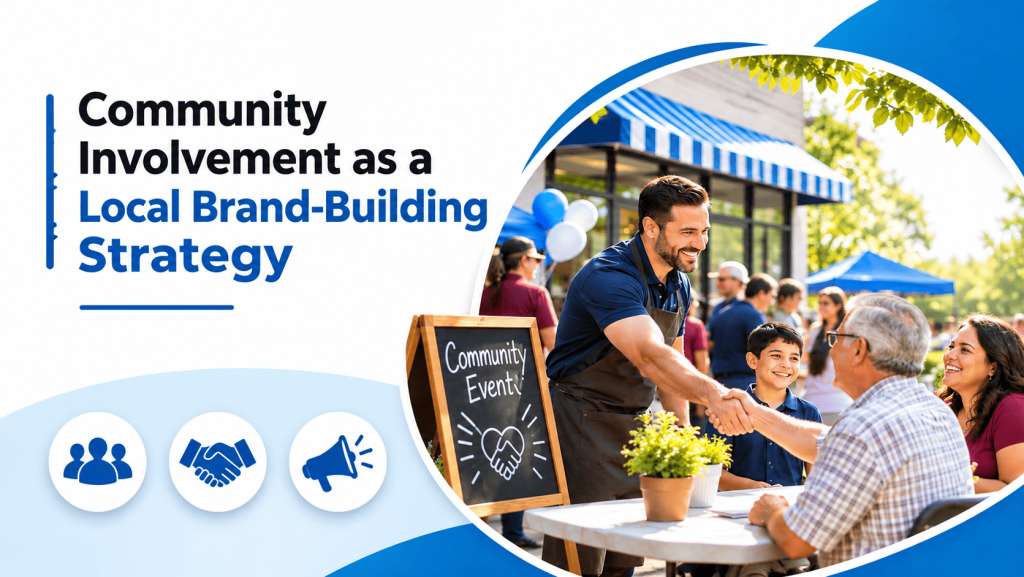
Ask longtime residents of almost any American town which plumber or pizza place they trust, and you will often hear about businesses that sponsor Little League teams, support school fundraisers, or show up at the summer festival year after year. That familiarity is earned slowly, and it is hard for competitors to copy.
Community involvement builds brand awareness offline, and increasingly, it shows up online too.
Choose Causes That Fit Your Business
The most effective community efforts make sense for your brand. A bike shop might lead a family ride or teach basic repair at a school. A bakery might donate to a food pantry. An accountant might volunteer to help seniors understand tax documents. When the connection is natural, people remember it.
Commit to a few ongoing efforts rather than scattering small donations everywhere. Consistency builds recognition.
Talk with your staff about which causes matter to them as well. Employees who care about a project tend to show up with real enthusiasm, and that energy is what people remember. A business that volunteers at the same animal shelter every spring becomes part of the community’s story in a way a one-time donation rarely does.
How Local Involvement Shows Up Online
Sponsorships often come with mentions on event pages, school websites, nonprofit newsletters, and local news coverage. Some include links to your website. These references help residents learn about your business and add to your online footprint with accurate, locally relevant information.
Make sure organizers have your correct business name and website. You can also share photos and recaps on your own social channels and Google Business Profile posts. Local groups and nonprofits often appear in the Community category on Brands For You, which can be a good place to discover organizations worth partnering with.
Avoid Turning Goodwill Into an Ad
Community involvement loses its value if it feels like a sales pitch. Do not hand out coupons at a charity event unless the organizers welcome it, and keep your posts focused on the cause rather than on your products. Credit the organizations you support.
Track results loosely by asking new customers how they heard about you. Some will mention the event, the team jersey, or the school newsletter.
Conclusion
Local brand awareness grows when people see your business doing good things nearby, again and again. Pick causes that fit, show up consistently, and make sure your business information is accurate wherever you are mentioned, including your own profiles and directories like Brands For You. The trust you build in the community often follows you online.
Frequently Asked Questions
Is sponsoring local events worth it for a small business?
It can be, especially when the event reaches your target customers and the sponsorship includes visible recognition. Treat it as brand building rather than direct advertising. Results tend to show up gradually, through familiarity, referrals, and word of mouth rather than immediate sales.
Can I ask for a link when I sponsor something?
You can ask the organizer to include your business name and website on their sponsor page, which is common practice. Be aware that Google expects paid links to be marked appropriately, often with a sponsored or nofollow attribute. The awareness value exists regardless of the link type.
How do I promote my community work without seeming boastful?
Focus your posts on the organization and the people it helps. Share photos, thank volunteers, and explain why the cause matters. Mention your role briefly. People respond well to genuine stories and poorly to posts that feel like self-congratulation.
What if my budget is too small for sponsorships?
Offer time or skills instead. Volunteer as a team, host a free workshop, provide space for a community meeting, or donate products. These contributions often create stronger relationships than a logo on a banner and cost little more than your effort.