A local newspaper writes about your company’s community food drive but does not link to your website. Is that mention still worth anything? Many business owners assume only links matter online. The reality is more nuanced.
Modern search systems try to understand businesses as distinct entities, not just as collections of web pages. Brand mentions are part of that picture.
What an Entity Means in Search
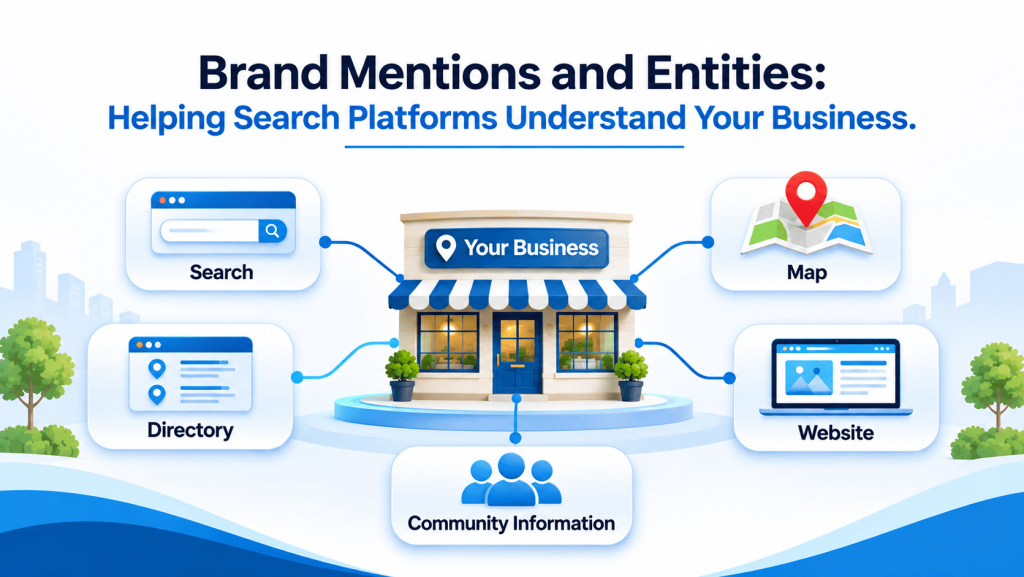
An entity is a specific, identifiable thing: a person, place, organization, or product. Search engines build knowledge about entities by connecting information from many sources. When your business name, location, website, and description appear consistently across reputable sites, it becomes easier for those systems to understand who you are and what you do.
That understanding can influence how your business is described in knowledge panels, map results, and AI-generated answers, though the exact methods are not public.
In practical terms, inconsistency creates doubt. If one site lists you as a marketing agency in Austin and another describes a software company with a similar name in Dallas, both readers and automated systems may struggle to tell which details belong to you. Clear, matching descriptions across the web reduce that confusion.
Linked and Unlinked Mentions
A linked mention sends visitors directly to your site. An unlinked mention still introduces your name to readers and adds to the overall picture of your business online. Both have value for awareness. If a friendly publication mentions you without a link, it is reasonable to politely ask whether they would add one, but do not pressure them.
Technology and communications firms often earn mentions through partnerships, case studies, or event sponsorships. Companies in the Communication and Technology category on Brands For You can make sure their listing details match how they are described in those articles.
How to Earn Genuine Mentions
Do newsworthy things and tell people about them. Sponsor local events, publish useful data from your own work, offer expert comments to local reporters, join industry associations, and participate in community projects. Keep your business details consistent in every place you appear, including directories and partner websites.
Avoid paying for mass mentions on low-quality sites. Mentions should come from places where real people might actually read about you.
Conclusion
Brand mentions are about reputation, not tricks. Make your business easy to identify by using consistent details everywhere, from your website to directories like Brands For You, and look for genuine reasons for people to talk about you. Over time, that body of accurate, real-world references helps customers and search platforms alike understand your business.
Frequently Asked Questions
Do unlinked brand mentions help SEO?
Search engines have not published a precise answer, and it is best not to assume a direct ranking effect. Unlinked mentions do increase awareness and can help platforms connect information about your business. Their clearest value is reaching new people who read about you.
How can I find out where my brand is mentioned?
Set up free alerts for your business name with a service such as Google Alerts, search your name in quotes periodically, and check social media mentions. Some paid tools offer more complete monitoring for businesses that need it.
What is a knowledge panel?
A knowledge panel is an information box that can appear in Google search results for well-known entities, showing details such as a description, website, and social profiles. Local businesses more commonly see a Business Profile panel. Accurate, consistent information online supports both.
Should I correct inaccurate mentions of my business?
Yes, when the error could mislead customers, such as a wrong phone number or address. Contact the publisher politely with the correct details. For minor wording differences, it is usually not worth the effort unless the mention ranks prominently for your business name.