Opening a new business means juggling permits, inventory, staff, and a hundred small decisions. Online visibility often gets pushed to “later,” and later becomes six months after opening, when customers still cannot find you.
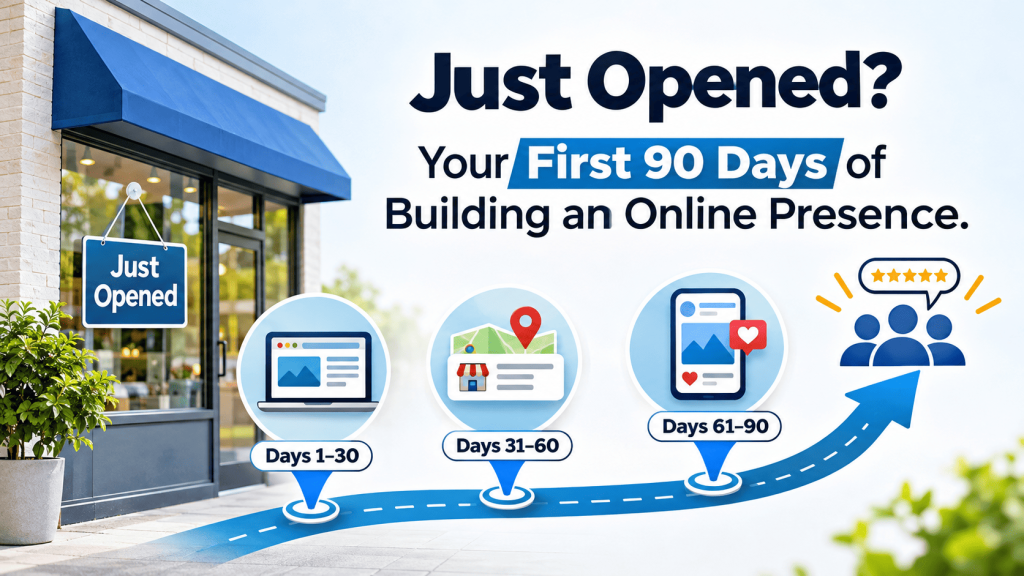
You do not need to do everything at once. A simple order of operations for your first 90 days gets the foundation in place without overwhelming you.
Days 1 to 30: The Foundation
Lock in your business name format, phone number, and address, then set up a basic website. It can be simple: what you sell, where you are, your hours, and how to contact you. Next, create and verify your Google Business Profile, and claim your listings on Apple Business Connect and Bing Places.
Reserve your preferred social media handles even if you only plan to use one or two platforms at first.
Write down every login you create in a password manager and keep the account under a business email address you control, not a personal one or an employee’s. New owners often lose access to early profiles when a staff member leaves, and recovering ownership later can take weeks of back-and-forth with platform support.
Days 31 to 60: Expand Your Footprint
Add your business to a handful of relevant directories: your local chamber of commerce, industry associations, and reputable general directories. Use exactly the same business details everywhere. Upload real photos to each profile once your space is ready.
Retail shops should choose categories that match what shoppers search for. A new gift boutique, for example, would fit naturally in the Gifts and Novelties category on Brands For You, where people browsing for unique presents can come across new local shops.
Days 61 to 90: Earn Social Proof
Start asking happy customers for reviews. A small card at checkout or a follow-up email with a direct link makes it easy. Respond to every review, positive or negative, with a professional tone. Post updates about new products or events on your Google Business Profile and social channels.
Avoid a common new-business mistake: buying fake reviews or asking friends who have never been customers to post them. Platforms prohibit this, and it can damage trust permanently.
Conclusion
A new business does not need a massive marketing budget to be found. It needs accurate information in the right places and a steady effort to earn genuine reviews. Work through the checklist in order, add your business to directories such as Brands For You once your details are final, and revisit everything at the 90-day mark to fix any gaps.
Frequently Asked Questions
Should I create my Google Business Profile before I open?
Google allows businesses to set an opening date up to 90 days in advance, which lets you build awareness before launch. Make sure your address, hours, and contact details are final. Verification may require proof that the business is operating or about to operate at the location.
Do I need a website if I have social media pages?
A website gives you a home base you control, which social platforms cannot. Even a simple one-page site with your services, location, hours, and contact information helps customers verify you. Social media is useful, but algorithm and policy changes are outside your control.
How many reviews does a new business need?
There is no set target. Focus on getting a steady flow of honest reviews from real customers rather than a burst all at once. Recent, genuine reviews tend to be more useful to shoppers than an old pile of ratings with no new activity.
What is the most common online mistake new businesses make?
Inconsistent information. Owners often test different phone numbers, names, or addresses during setup and forget to update early listings. Decide on your final details first, then create profiles. It saves a lot of cleanup work down the road.